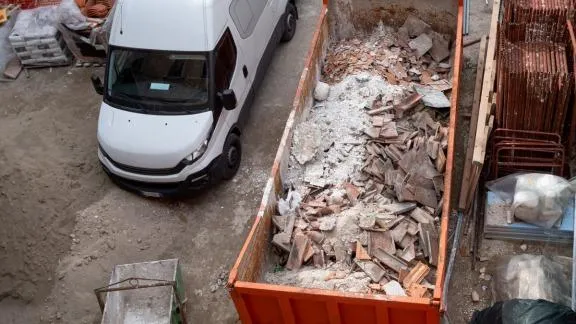
Construction Debris Disposal Rules in San Bernardino County
Construction Debris Disposal Rules in San Bernardino County
Most contractors think about debris at the end of a job. By then the pile has grown, the client is waiting for the site to be clear, and disposal is whatever can be arranged quickly.
That is usually the most expensive way to handle it, and on permitted work it can create a compliance problem as well. California has diversion requirements attached to many projects, and satisfying them after the fact is considerably harder than planning for them.
What Counts as Construction Debris
Construction and demolition debris covers the material generated by building, renovation and teardown work.
That includes lumber and framing offcuts, drywall, roofing material, concrete, brick, tile, asphalt, metal, glass, insulation, carpet, cabinetry, fixtures and packaging.
It does not include hazardous material, and this distinction matters. Asbestos containing material, lead paint waste, solvents, adhesives and treated timber all fall under separate handling rules with separate consequences for getting it wrong.
Older properties are where this catches people out. Renovation work on a building from before the late seventies carries a genuine possibility of asbestos in flooring, insulation and roofing, and testing before demolition is the sensible route.
The Diversion Requirement Contractors Miss
California building standards require many construction and demolition projects to divert a substantial portion of debris away from landfill through recycling or reuse.
Local jurisdictions administer this, and requirements vary between cities within San Bernardino County. Some require a waste management plan submitted with the permit application. Some require documentation of actual diversion before final sign off.
A few also hold a refundable deposit at permit stage, released only once diversion is evidenced.
The practical consequence is that a contractor who cannot produce disposal receipts may find a project held at inspection. Checking the local requirement before work begins takes a phone call and avoids that entirely.
Why Separating Material Saves Money
Mixed debris is the most expensive material to dispose of, because a facility has to sort it or send the whole load to landfill at full tonnage rates.
Separated material is cheaper and sometimes carries value. Clean metal has scrap value. Clean concrete and asphalt can often be processed as aggregate at reduced rates. Clean wood and cardboard usually cost less to divert than to dump.
On a site with room for separate piles, sorting as you go is straightforward. On a tight site it is harder, which is where scheduled removal of specific material streams works better than one large mixed collection at the end.
Concrete deserves particular attention. It is heavy, disposal is weight based, and it is one of the most readily recycled materials available. Sending clean concrete to landfill is usually the single most avoidable cost on a demolition job. Regular material and scrap hauling priced around specific streams is normally cheaper than mixed loads.
Keeping a Site Clear While Work Continues
Debris accumulation is a safety issue before it is a cost issue. Trip hazards, exposed fasteners and blocked egress all appear in the same accumulation that slows the trades down.
On projects running several weeks, scheduled pickups usually beat a single container. A container occupies space, fills unevenly and sits idle between phases.
Phased removal also matches how debris is actually generated. Demolition produces one type of material, framing another, finishing another. Removing each as it is produced keeps streams separated without anyone having to sort a mixed pile later.
For contractors running multiple sites, a standing arrangement for construction debris and trash cleanup removes the scheduling problem entirely.
What Cannot Go in a Standard Load
Some material has to be handled separately regardless of the project.
Asbestos requires licensed abatement and cannot be placed in a general debris load under any circumstances. Lead paint waste has its own handling requirements.
Paint, solvents, adhesives, sealants and fuel are hazardous waste. Fluorescent tubes and ballasts, batteries and electronic components are separate streams again.
Appliances containing refrigerant require certified recovery before disposal. Tyres are excluded from general loads throughout California.
A crew arriving to find these mixed into a pile will normally decline the material, which costs a visit and delays the site.
Documentation Worth Keeping
Keep disposal receipts and weight tickets for every load. On permitted work these are what evidence diversion.
Record which facility received which material. Jurisdictions asking for proof want specifics rather than a summary.
Verify that whoever hauls your debris is licensed and insured. Illegal dumping investigations trace waste back to its origin, and a contractor who hired the cheapest available truck can find themselves answering for where it ended up.
On any project where the permit references a waste management plan, treat the paperwork as part of the job rather than an afterthought. It is far cheaper to collect receipts as you go than to reconstruct a diversion record at final inspection.
Frequently Asked Questions
What are the construction debris disposal rules in California?
California building standards require many construction and demolition projects to divert a significant share of debris from landfill through recycling or reuse. Individual cities administer the requirement, and some require a waste management plan at permit stage and documented diversion before final sign off.
How much does construction debris removal cost?
Pricing generally reflects volume and weight, since disposal fees are tonnage based. Heavy materials such as concrete, tile and roofing cost more than light framing waste. Separating clean material into single streams usually reduces the total compared with mixed loads.
Can I put construction debris in a regular dumpster?
Only if the container and disposal arrangement are set up for it. Construction debris is heavy and frequently exceeds standard weight allowances, which triggers overage charges. Hazardous material such as asbestos, lead waste and solvents cannot go in any general container.
What construction materials can be recycled?
Concrete and asphalt can often be processed as aggregate, metal has scrap value, and clean wood, cardboard and drywall are accepted by many facilities. Recycling generally requires materials to be separated rather than mixed, which is why sorting on site matters.
Who is responsible if construction debris is dumped illegally?
Investigations trace waste back to its source, and the party that generated it can be held responsible even where a third party did the dumping. Using a licensed, insured hauler and retaining disposal receipts is the practical protection against this.
