Dumpster Rental vs Junk Removal: Which Is Cheaper for You?
Dumpster Rental vs Junk Removal: Which Is Cheaper for You?
You have a garage full of things that need to go, and two options in front of you. Put a dumpster on the driveway and fill it yourself, or have a crew come and take it all away.
The dumpster looks cheaper on the quote. Sometimes it genuinely is. Often it is not, once you count what the quote leaves out. Here is how the two actually compare, and which situations favour each.
What You Are Really Comparing
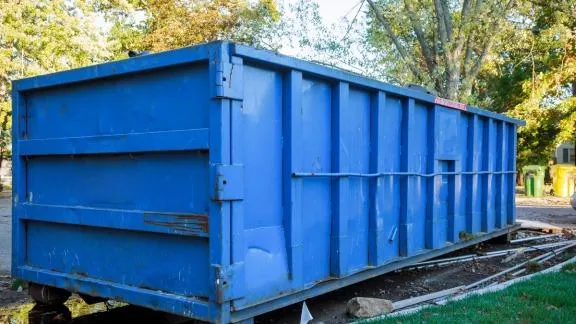
A dumpster rental is container access. You pay for a box, a delivery, a rental window and a weight allowance. Everything after that is your labour.
Junk removal is a service. A crew arrives, loads everything, sweeps up and disposes of it. You are paying for the truck and the people, not the container.
The comparison is not really about price. It is about who does the work and how long you need the space.
Where Dumpster Pricing Gets Complicated
The advertised rate is rarely the final number, and the additions are predictable.
Weight allowances are the main one. Most quotes include a tonnage limit, and overage is charged per ton. Heavy material such as concrete, tile, soil and roofing debris passes that limit quickly.
Rental periods matter too. Quotes usually cover a set number of days, and extensions are billed daily. A project that runs a week over changes the arithmetic considerably.
Then there are the practical costs nobody quotes. Permits are required in many cities if the container sits on a public street. Driveway damage from a heavy container is a genuine risk. And prohibited items still have to be dealt with separately.
Where Junk Removal Pricing Is Different
Junk removal is generally priced by volume, meaning how much space your items occupy in the truck.
The number you are quoted normally includes labour, loading, transport and disposal fees. There is no separate charge for the hours you did not have to spend.
Heavy materials can carry additional cost here too, because disposal fees are weight based regardless of who hauls it. The difference is that you find out before the work starts rather than when the container is collected.
For most residential jobs, a single truck load handles far more than people expect. A full garage clearout is commonly one visit.
Timing is the other quiet advantage. Removal is scheduled for a specific window, so nothing occupies your driveway before or after. On a property being listed or handed back, that matters more than the headline price does.
When a Dumpster Is Genuinely the Better Choice
Long running projects favour containers. If you are renovating over three weeks and generating debris continuously, having a box on site is more practical than scheduling repeated pickups.
Large volumes of uniform material also favour dumpsters, particularly on construction sites where the same debris is produced daily.
If you have free labour available and no time pressure, the economics improve further. A weekend, a few willing helpers and a container can be the cheapest route by a clear margin.
Access matters as well. Some properties simply have room for a container, and having it sit there for a week costs nothing extra in convenience.
Phased work is another case for containers. On a renovation where demolition happens in one week and finishing waste appears three weeks later, a container spanning both avoids paying twice for mobilisation.
When Junk Removal Wins
Anything involving heavy lifting changes the calculation immediately. Appliances, furniture, hot tubs, exercise equipment and anything on a second floor are where the labour cost becomes real.
One off clearouts favour removal. If everything can go in a single visit, paying for a week of container rental makes little sense.
Time pressure favours removal strongly. Property turnovers, closings and move out deadlines rarely allow for a leisurely fill.
Physical limitation is the honest factor most comparisons ignore. Plenty of people renting a dumpster discover on day two that lifting a sofa into a container is a different proposition than it looked. Residential junk removal exists precisely because the loading is the hard part.
How to Decide Without Overthinking It
Ask three questions. How long will you be generating waste? Can you physically load it? Does the material weigh a lot?
Continuous generation over weeks points to a container. A single clearout points to removal.
Heavy material points to whichever option quotes disposal transparently, because weight is the cost that surprises people either way.
If the job is commercial, a further factor applies. Containers occupy parking and loading space, which has its own cost. Scheduled commercial junk removal often works out cheaper once that disruption is accounted for.
Frequently Asked Questions
Is a dumpster rental cheaper than junk removal?
For long projects with steady debris and free labour, usually yes. For a single clearout, often no, once you include weight overage charges, rental extensions, permits where required and the value of your own time loading it. The advertised rate is rarely the final invoice.
How much does junk removal cost in the Inland Empire?
Most companies price by volume, meaning how much space items take in the truck, with single item pickups starting low and full truck loads costing more. Heavy materials such as concrete, tile and soil carry additional disposal fees because landfill charges are weight based.
Do I need a permit for a dumpster in California?
If the container sits on a public street, most cities require a permit. Placing it entirely on private property such as a driveway usually does not. Rules vary by city, so check with your local authority before delivery rather than after.
What items can neither dumpsters nor junk removal take?
Hazardous materials are excluded across the board. That includes asbestos, paint and solvents, pesticides, fuel and used oil, car batteries and tyres. These require disposal through a household hazardous waste facility regardless of which option you choose.
How long can I keep a rented dumpster?
Standard rental periods commonly run about a week, with daily charges after that. If your project timeline is uncertain, confirm the extension rate upfront, since that is where a competitive quote frequently stops being competitive.
